The Insight
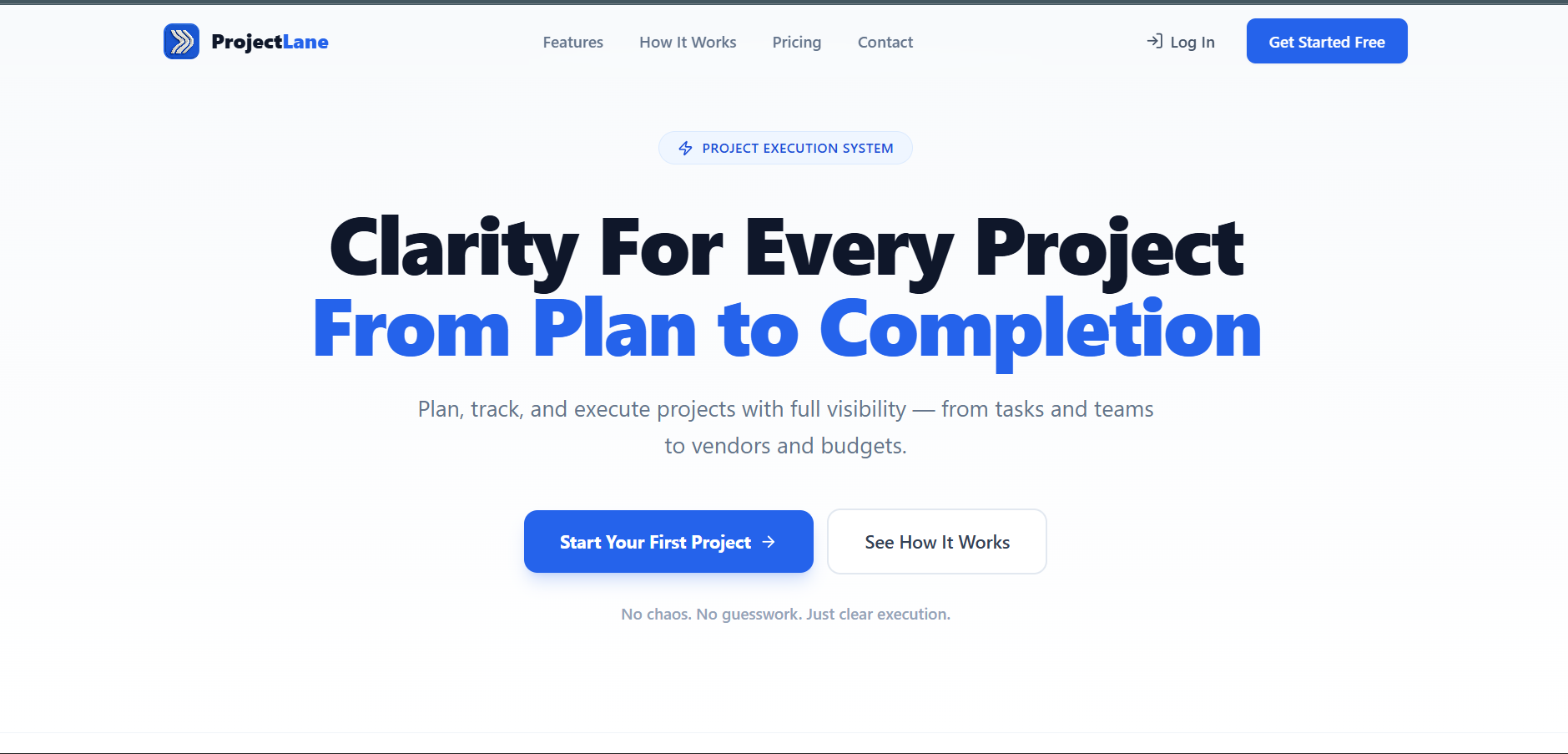
ProjectLane is a project execution platform built for construction SMEs and project professionals across Africa. It replaces the informal, fragmented systems, such as WhatsApp group chats, Excel spreadsheets, and phone calls, that project teams use to manage tasks, vendors, budgets, and client communication.
The problem is not that construction businesses lack tools. It is that every tool available was built for Western enterprise companies at enterprise prices. No one had built for the African SME, Naira-native, mobile-first, simple enough for a 1-person firm, powerful enough for a 20-person team.
The Problem
Across Nigeria, construction contractors, interior designers, architects, and real estate developers are running multi-million naira projects on informal tools. The result is predictable: projects run over budget, client relationships suffer, vendor disputes become personal, and business owners have no real-time visibility into what is actually happening.
- Budget tracking happens on Excel, updated once a week, if at all
- Vendor payments recorded on WhatsApp, no audit trail, constant disputes
- Task updates come via phone calls, no visibility without asking
- Client communication scattered across WhatsApp, email, and phone
- Budget overruns discovered at the end of a project, never during it
Enterprise construction software is sold on custom annual quotes. Procore prices by annual construction volume, and published third-party estimates for small contractors run from about $4,000 to $80,000 a year. Northspyre does not publish its prices. Either way, that is out of reach for most African SMEs. Generic project tools like Asana and Monday are not built around construction budgets, vendor payments and approvals. ProjectLane fills the gap between the two.
What I Built
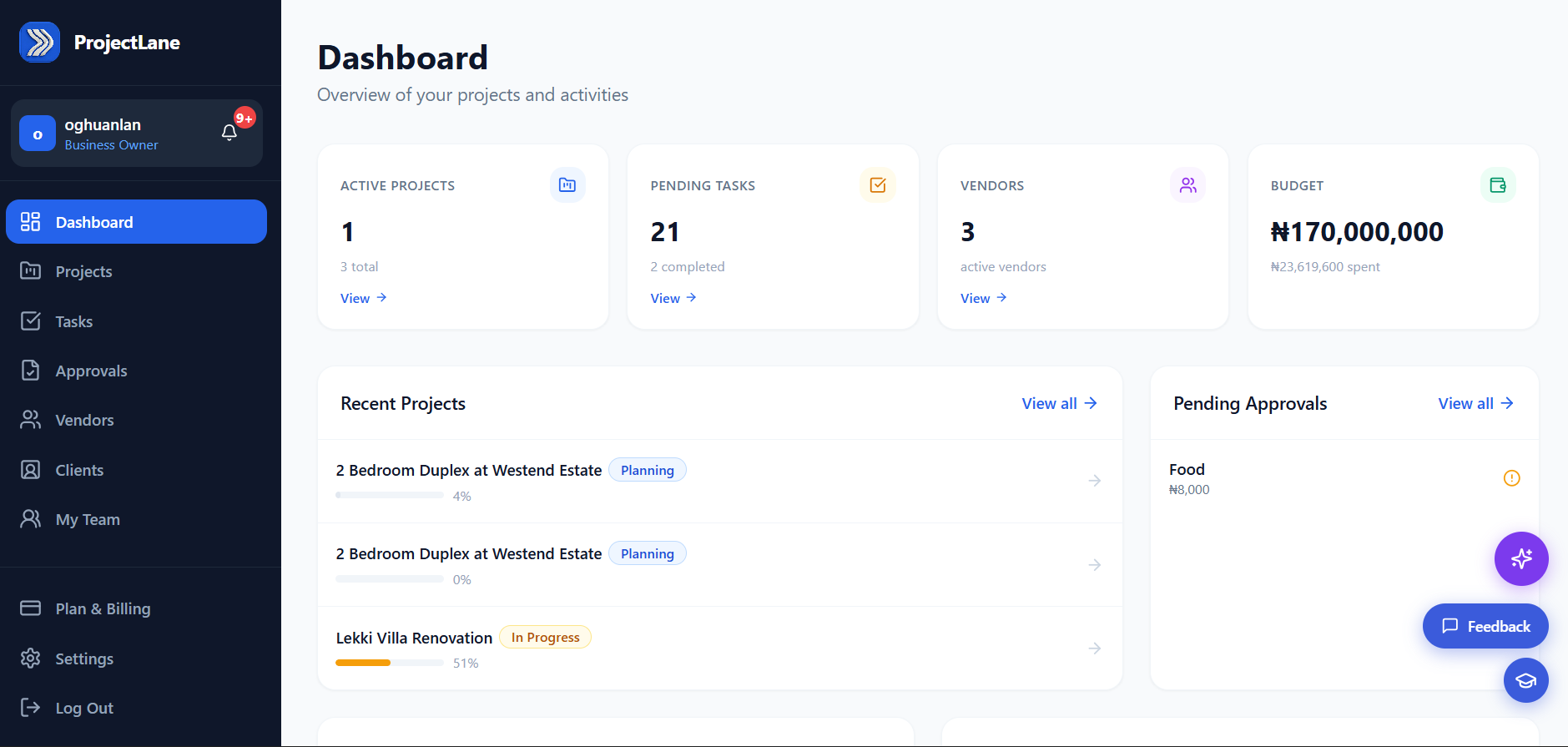
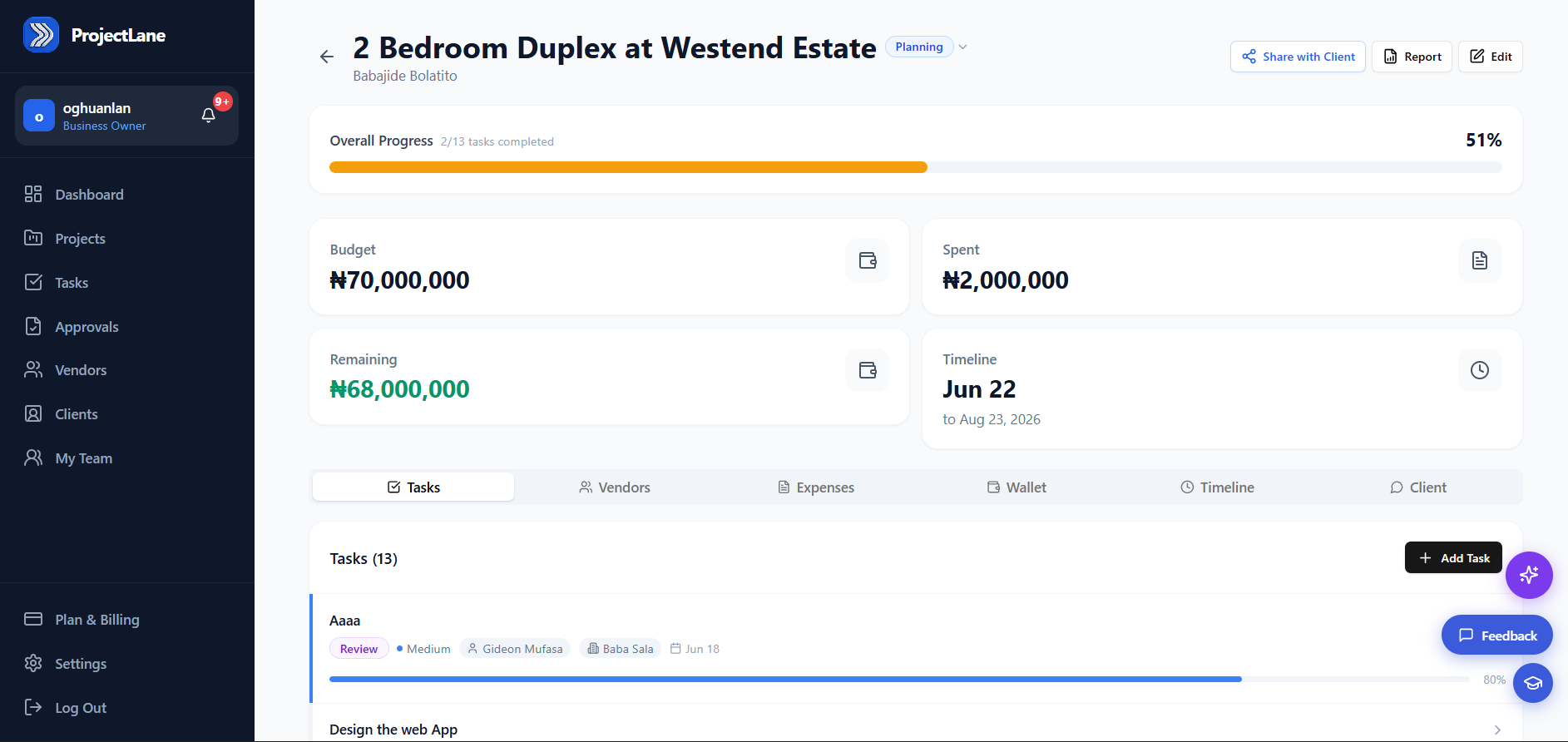
A full-stack SaaS with live features across task management, vendor management, budget tracking, client communication, and AI-assisted operations.
Tech Stack
Key Product Decisions
Vendors never log in. Business owners add them like contacts, define contracts, and log payments against those contracts. This keeps the platform simple and removes the complexity of a two-sided onboarding problem.
When a team member lacks financial visibility permission, monetary amounts are replaced with ••••• everywhere, not removed from view. This prevents confusion about whether data exists while protecting sensitive numbers.
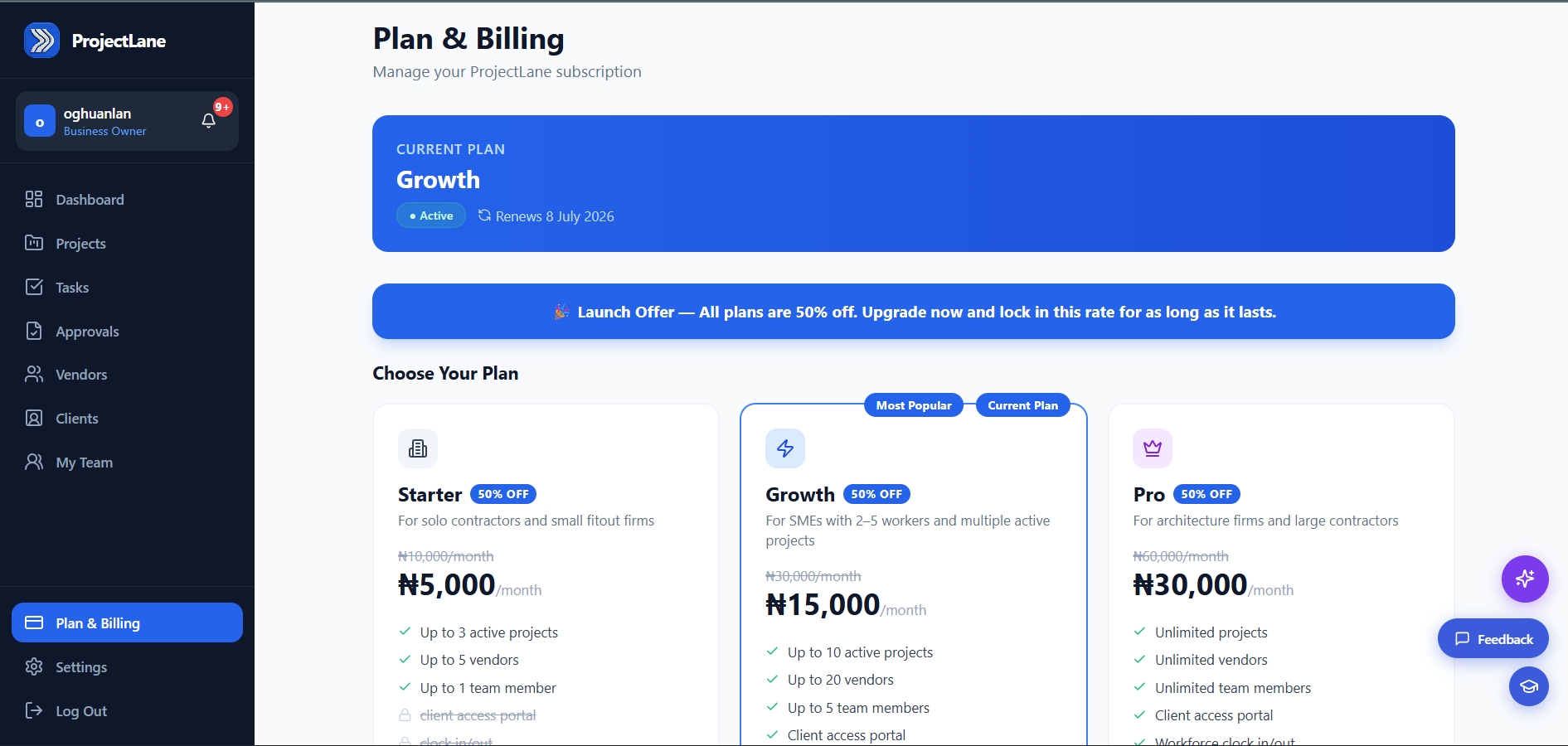
Starter plan users cannot access the AI Assistant. The button is hidden in the UI and the backend rejects requests with a 403 error. Both layers are intentional. UI-only gating can be bypassed. Defence-in-depth protects the paid feature.
The 5-step onboarding tour follows the order a contractor actually thinks: Team → Vendors → Project → Tasks → Expenses. Not the system's data model. This reduces cognitive friction on first use and makes the product feel intuitive from minute one.
Results & Impact
| Problem Before | Before ProjectLane | With ProjectLane |
|---|---|---|
| Budget tracking | End-of-project surprises, manual Excel | Live wallet, every naira tracked in real time |
| Vendor payments | WhatsApp records, frequent disputes | Full audit trail, date, amount, approver, receipt |
| Client updates | Constant phone calls, unprofessional | Secure portal, client self-serves, no financial exposure |
| Task visibility | Phone calls to supervisors for status | Real-time updates with photos, instant notifications |
| AI actions | Manual data entry for every update | Type or speak, tasks and expenses logged in seconds |
| Mobile access | Browser-only, no notifications | Installable PWA, push notifications, works like a native app |
Milestones Achieved
- ✦ Full platform built, tested, and launched at projectlane.online
- ✦ Started on Base44, then migrated off it to a fully custom stack (Vercel + Railway + Supabase) without losing user data: 37 businesses, 115 tasks, 86 vendor contracts and 118 vendor payments carried across, with zero downtime. The 55 frontend files that depended on Base44 kept working through a compatibility shim, and every user was emailed that their account had moved
- ✦ Paystack payment integration live and processing
- ✦ AI assistant live inside the app, with tool-calling
- ✦ PWA with real-time push notifications live
- ✦ PostHog analytics and Sentry error tracking integrated
What I Learned
The shift from "project management platform" to "project execution platform" changed how every investor meeting started. Words matter more than most founders acknowledge. The right framing is not cosmetic. It changes how people categorise you, compare you, and remember you.
Early pitches were too construction-specific. The real target is anyone managing projects, money, and teams on informal tools. Construction is the wedge. Describing it that way opened the total addressable market without diluting the focus.
Gating the AI Assistant at both UI and backend levels cost one extra hour. Skipping the backend layer would have left a hole any motivated user could exploit. Defence-in-depth is not paranoia. It is professionalism.
See it Live
ProjectLane is live and serving businesses across Nigeria. Visit the product or get in touch to discuss how I work.